
Accessory Breast Tissue Removal
Standard medical accessory breast tissue removal at Ethics Aesthetic Clinic. Performed directly by specialist doctors.
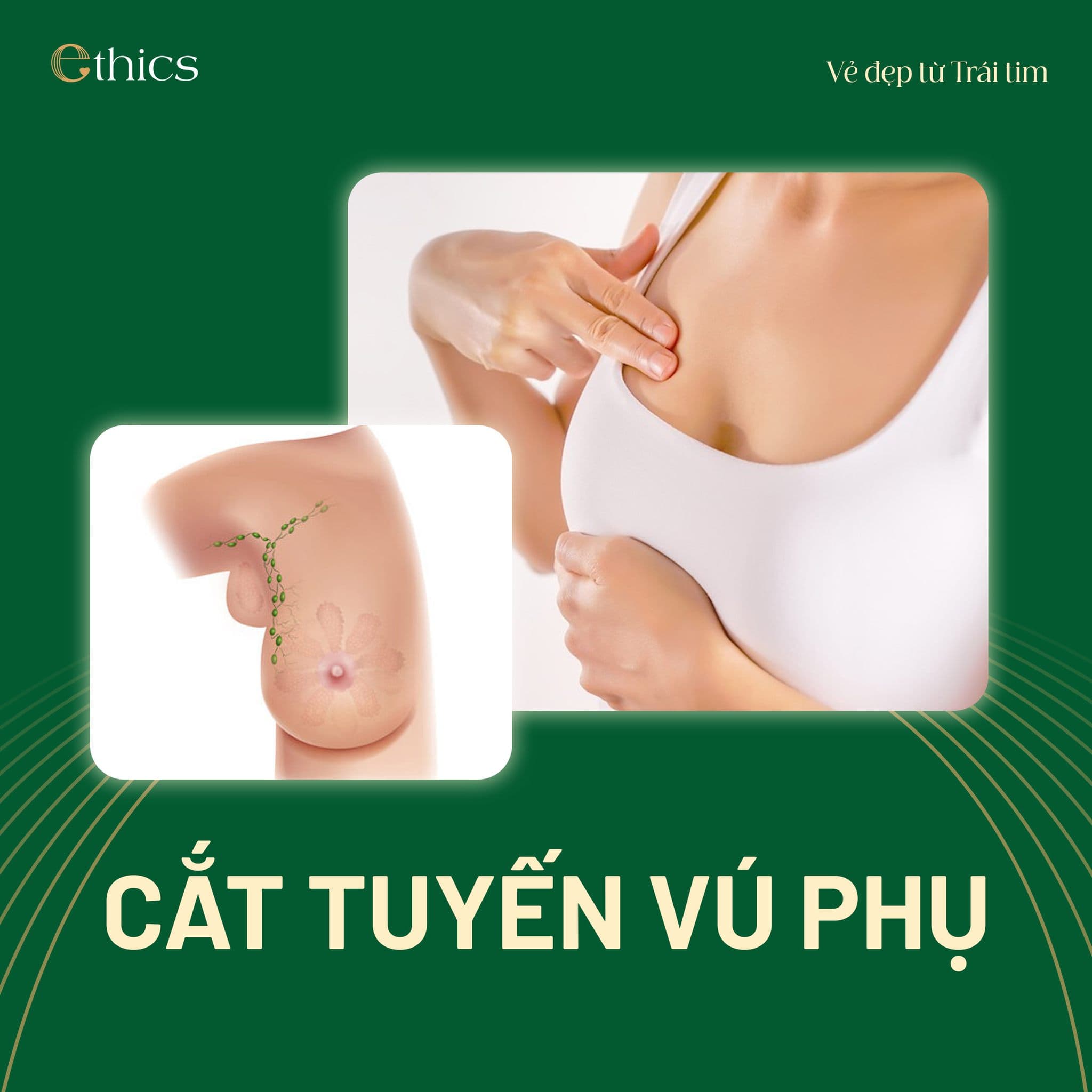
Accessory breast tissue is what? Is it a disease? It usually appears in the armpit or just below the main breast, and in most cases it is not harmful, but there are still some cases where removal of accessory breast tissue is needed. So what are those cases? Let TMV Ethics help you learn more about accessory breast tissue.
WHAT IS ACCESSORY BREAST TISSUE?
Accessory breast tissue is a form of congenital anomaly that can appear in both men and women, with an incidence rate of 5%. Accessory breast tissue differs from person to person; it varies in size, number and location. What is accessory breast tissue? Usually accessory breast tissue grows in the armpit area or just below the breast. However, there are still cases where accessory breast tissue grows in any other location on the body, such as the hand, genitals, buttocks, and so on.WHAT CAUSES THE FORMATION OF ACCESSORY BREAST TISSUE?
According to scientific researchers, accessory breast tissue is formed while still in the fetus in the mother's womb. According to natural biological mechanisms, humans have only 2 main breasts. However, there are some cases where accessory breast tissue also develops alongside them. Still, some accessory breast tissue only appears and does not affect health in any way. But there are also cases where accessory breast tissue grows and functions like a main breast, directly affecting hormones.IS REMOVING ACCESSORY BREAST TISSUE NECESSARY?
Accessory breast tissue appears in both men and women, and if the tissue does not grow too large it usually causes no effects for men. But it causes cosmetic concerns for women. Beyond cosmetic concerns, in some cases when accessory breast tissue grows and functions like a main breast it causes hormonal disturbance, and during menstruation the accessory breast tissue may become swollen and painful. It also carries a potential risk of breast cancer. Therefore, removing accessory breast tissue is something that can be done to eliminate potential risks to health as well as improve cosmetic concerns.WHO SHOULD HAVE ACCESSORY BREAST TISSUE REMOVED
- Women/men whose accessory breast tissue is too large, affecting daily life and causing cosmetic concerns. - Accessory breast tissue that is inflamed, causing pain and possibly becoming malignant. - Stable health and no reaction to medications used during treatment.WHO IS NOT SUITABLE FOR ACCESSORY BREAST TISSUE REMOVAL
Although accessory breast tissue may cause inconvenience and potential health concerns, in some cases below, if removal is desired it must be done under the strict indication of a doctor. - People with conditions such as heart disease, high blood pressure or diabetes. - Women who are in their menstrual cycle. - Women who are in the postpartum period. - People with psychological conditions.ACCESSORY BREAST TISSUE REMOVAL PROCESS
Accessory breast surgery is performed at the location where the excess breast tissue appears, outside the main breast tissue. In addition, thanks to the skill and qualifications of the professional medical team, cases where breast tissue can be removed are carried out following the process below. Step 1: Examination and consultation The condition of each client is checked to determine the exact location of the accessory breast tissue to be removed with complete accuracy. In addition, there are cases where an accessory breast does not form breast tissue, and many clients may mistake it for a lymph node. In that case the doctor will carry out an examination and give an accurate result. Step 2: Tests This testing step aims to ensure the client meets health requirements and to rule out any risks during the surgery. Step 3: General anesthesia / local anesthesia For cases where small accessory breast tissue appears, local anesthesia will be used so that the surgery can thoroughly remove it. But for some cases where the accessory breast tissue is large, the doctor will choose general anesthesia so the client can be comfortable and the stress during surgery is reduced. Step 4: Performing the surgery The professional team of Ethics Aesthetic Clinic will assist the doctor during the surgery to completely remove the accessory breast tissue from the client's body quickly. Step 5: Post-operative care Depending on each client's condition and case, the doctor will decide whether the patient stays for monitoring in the recovery room or can go home to rest. When caring for yourself at home, clients should follow the doctor's care instructions exactly and take medications exactly as prescribed by the doctor.POST-OPERATIVE CARE
- Clean the wound daily with normal saline. Use cotton swabs to soak up the saline and clean the incision area. - Avoid letting the incision site come into contact with water or dirt. - Limit movement to avoid affecting the surgical area. - Avoid foods that slow wound healing and make keloid or dark scars more likely, such as - Take antibiotics to prevent infection and swelling of the incision; take only the dose the doctor has prescribed. Note: after accessory breast tissue removal, women may experience conditions such as: Bruising and swelling: This is a normal symptom after breast tissue removal, and this stage lasts from 3 to 5 days. You may combine it with ice packs to reduce swelling. In summary, removal of accessory breast tissue is a necessary medical indication and is performed for cases that meet the conditions for surgery. At Ethics Aesthetic Clinic, breast tissue removal is performed to standard with a professional post-operative team, so you can trust and feel at ease using the service.The information on this website is for general reference and does not replace a consultation with a doctor. Results and recovery differ from person to person. Pages are translated from the Vietnamese originals.
Ask about this service
Leave your name and phone number with the country code. Our team will contact you to answer your questions and arrange a consultation.